Phoebe Maroulis – The Whole Picture
August 17, 2026Aunty Diane Riley-McNaboe – Carrying Language, Culture and Story Forward
August 20, 2026Phoebe Maroulis – The Whole Picture
August 17, 2026Aunty Diane Riley-McNaboe – Carrying Language, Culture and Story Forward
August 20, 2026THE ORANA WOMAN · EDITION 01 · HISTORICAL SISTERHOOD
Pearl Gibbs
From Wambuul to the Women Who Remember Her
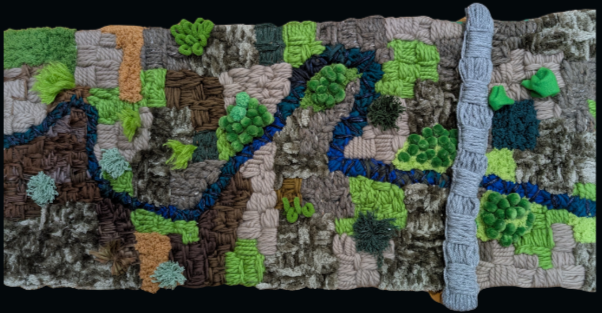
Pearl Gibbs died in Dubbo in 1983. More than forty years later, her name was in the room at Inspired by Her: carried in Aunty Di’s voice, held inside Sophia Johnson’s textile work Wambuul: Echoes of the Turning Tide, and now written into the name of a new bridge across the river.
THE ORANA WOMAN · HUMAN AND LOCAL · CREATIVE COURAGE
THE FIRST WAY IN
Not through a history book. Through another woman’s work.
Sophia Johnson made Wambuul in response to Pearl’s life and Dubbo legacy. At the exhibition opening, Aunty Di brought Pearl into the room again through living cultural memory.
THE ROOM
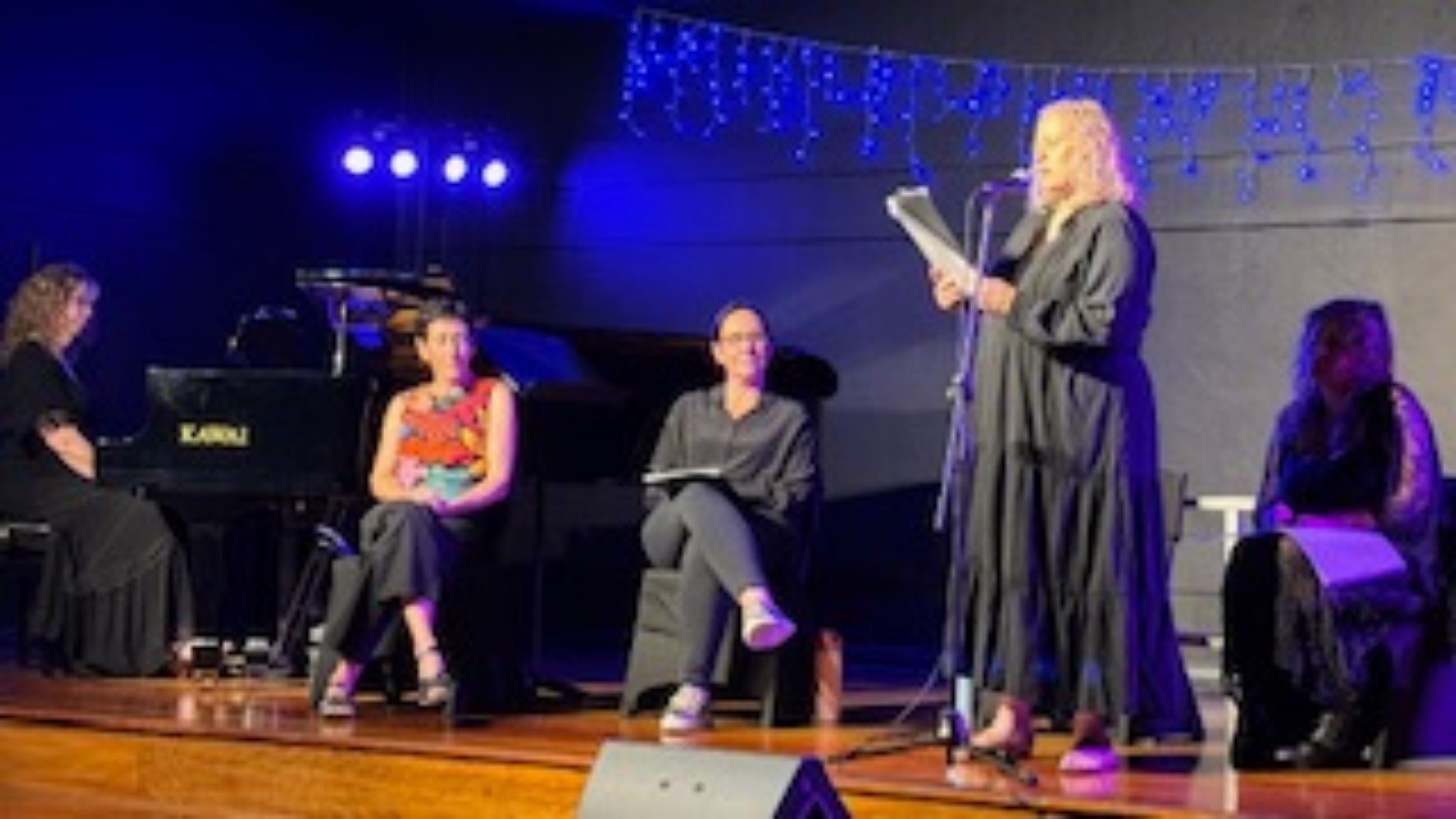
Pearl was not physically in the room. Her story was.
At the 2026 Inspired by Her opening, Aunty Di sang the Welcome to Country and spoke about Pearl Gibbs. Nearby was Sophia Johnson’s textile work, Wambuul: Echoes of the Turning Tide.
Sophia made the work in response to Pearl, Dubbo, the river and the bridge that would carry Pearl’s name. An artwork cannot explain a life as large as Pearl’s, but it can show how memory moves: a woman can leave this world and still be part of what other women make, say and choose to carry.
The first way Pearl enters The Orana Woman is through the women who refuse to let her become only a name from the past.
THE WOMAN
Before the bridge, there was Pearl Mary (Gambanyi) Gibbs.
Pearl was born at La Perouse in Sydney in 1901. Her mother, Mary Margaret Brown, had been born in Brewarrina. Pearl spent parts of her childhood in Yass and western New South Wales, including near Bourke and Byrock.
She experienced racial discrimination at school and, as a young woman, came to know the conditions faced by Aboriginal girls placed into domestic service away from their families. Later she would speak publicly about that exploitation and about the rights and wellbeing of Aboriginal women and children.
Pearl’s politics were never only about policy. They were about what policy did to actual people.
THE WORK
She organised, spoke, wrote and connected.
In 1937 Pearl began working with the Aborigines Progressive Association alongside figures including Bill Ferguson and Jack Patten. She gathered information about conditions at Brewarrina and helped plan the 1938 Day of Mourning.
As secretary of the Association in 1938 and 1939, she spoke about conditions facing mothers and children on reserves and Aboriginal girls isolated in domestic service.
She also understood media. Pearl kept journalists informed, wrote for women’s, local and Sydney newspapers and spoke on radio station 2GB in 1941 about Aboriginal and women’s issues. She built relationships across Aboriginal organisations, women’s movements, unions and political networks.
DUBBO
This is not a distant national history. Pearl lived here.
After the Second World War, Pearl settled in Dubbo with her mother. In 1950 she became secretary of the Dubbo branch of the Australian Aborigines’ League and in 1952 organising secretary of the NSW branch of the Council for Aboriginal Rights.
In 1954 she was elected to the NSW Aborigines Welfare Board, becoming its first woman member and only the third Aboriginal person to sit on the board. The position did not give her the power she had hoped for: she was excluded from key decisions and restricted in her ability to visit reserves. She resigned in 1957.
Outside the board, she kept building other ways to act. She helped bring together the Aboriginal-Australian Fellowship and later established a small hostel in Dubbo for Aboriginal people who had travelled to town for medical treatment. Pearl died in Dubbo on 28 April 1983.
The national story and the local story are the same story here.
THE NAME ON THE BRIDGE
Decades later, Dubbo put her name into the landscape.
The naming of Dubbo’s new bridge followed First Nations and wider community consultation involving Transport for NSW and Dubbo Regional Council. On 2 December 2025, Transport announced the name: Aunty Pearl Gibbs Bridge.
Sophia’s Wambuul holds that bridge inside a river landscape. At Inspired by Her, Aunty Di spoke Pearl’s name into a room of women. Around the same period, the city was formalising that name in public space. Different acts of remembrance were happening at once.
THE WOMEN WHO REMEMBER HER
Memory is not passive.
Sophia responded to Pearl through making. Aunty Di brought another kind of knowledge into the room: spoken, lived and connected to place. Erifili Davies created a curatorial space where those threads could sit beside the work of other women.
The Orana Woman can do one more small thing: keep the connections visible after the exhibition room has emptied. That does not make Pearl ours to simplify. It asks us to get the history right, distinguish what we know from what still needs cultural or family context, and keep following the thread rather than pretending one article can finish it.
A bridge can carry a name. An artwork can carry a response. A woman in a room can carry memory forward.
THE RELATIONSHIP MAP
Pearl’s story keeps travelling through place and people.
Pearl Gibbs → Aboriginal rights organising → life and community work in Dubbo → Aunty Pearl Gibbs Bridge.
Pearl Gibbs → Sophia Johnson → Wambuul → Aunty Di → Inspired by Her → The Orana Woman.
THE RESPONSIBILITY
Remembering someone is not the same as owning their story.
Pearl’s historical record can be researched. The living cultural meaning around her, Country and community also needs the voices of people with the right knowledge and relationship.
The story continues because people continue to carry it.
NEXT IN THE ORANA WOMAN
Aunty Di — Carrying the Story Forward
Pearl’s profile takes us into the historical record. Aunty Di’s story brings us back into the room: to living cultural memory, Welcome to Country, Wambuul and the responsibility of carrying history forward.
Next: the woman whose voice made the connection present.