THE PAPER
Dubbo Photo News.
Deputy editor and journalist, working with a small team to bring community stories to tens of thousands of local readers each week.
THE OTHER ROOM
Dead End Coffee Club.
With Kaz Hamilton, Sharon helped establish the region’s first death cafe in Narromine, later helping the conversation travel into Dubbo.
NEWS DONE DIFFERENTLY
The thing Sharon likes most about journalism is the people.
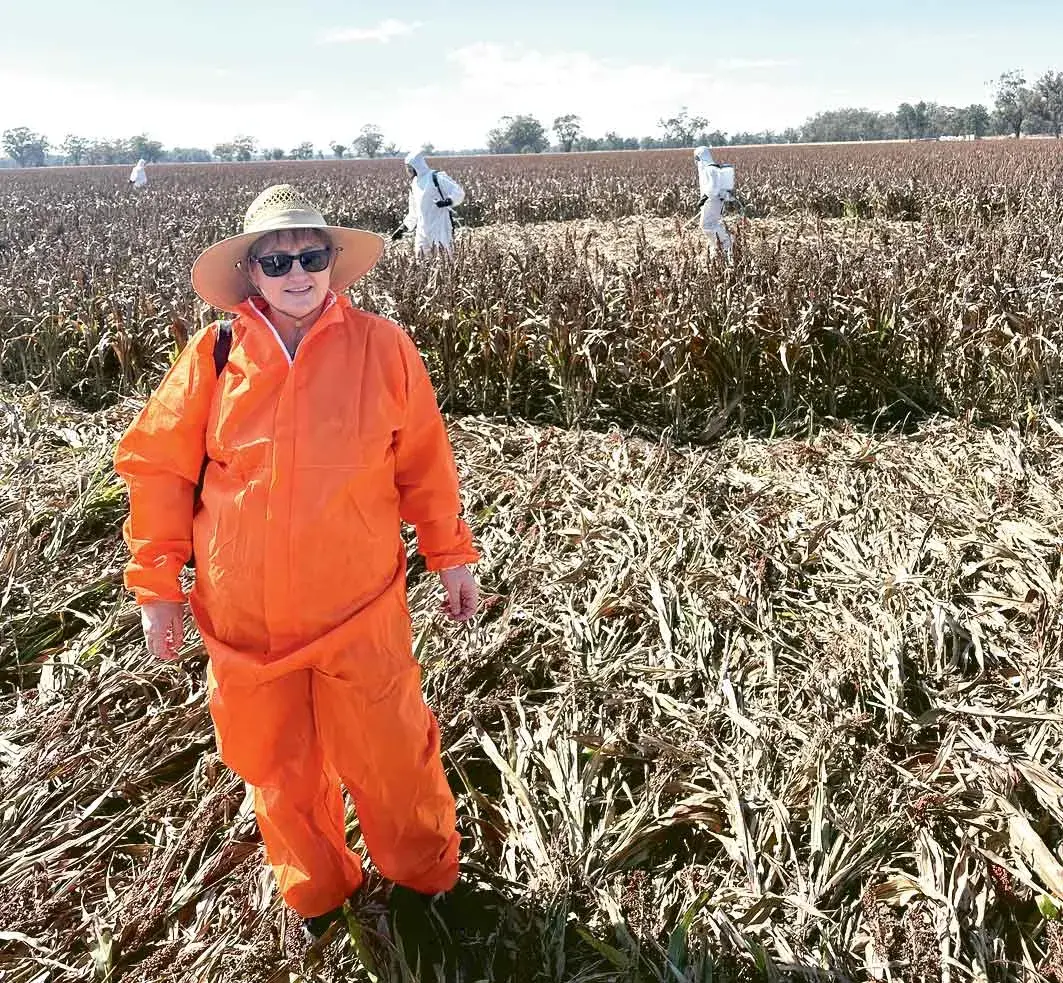
At Dubbo Photo News, Sharon Bonthuys is deputy editor and a journalist. She writes, edits other people’s stories and works with the wider team on how the weekly paper looks and feels.
The publication is deliberately local. It is not trying to compete with a breaking-news cycle every minute of the day. It gives space to the people, clubs, community organisations, schools, businesses, sporting groups and small stories that make a region feel like itself.
Sharon has called it “news done differently”.
“Nothing gives me more pleasure than to talk to people and groups in the community and put stories together on the page.”
— Sharon Bonthuys, Dubbo Photo News
A LATE ARRIVAL
She did not take the obvious road into journalism.
Sharon began her journalism career at the Narromine Star in December 2021 after years living and working in remote communities in the Northern Territory and Queensland.
She came into the newsroom as a writer rather than as somebody who had followed the standard journalism-school pathway. She learned the rhythms of community reporting by doing it: meeting people, understanding the town, working out what was genuinely a story and building the relationships that make local journalism possible.
Country Press NSW named her Journalist of the Year in 2022.
Then it did it again in 2024.
There is something I love about a woman arriving at the work later and then becoming exceptionally good at it.
THE WRITER WAS ALREADY THERE
Journalism did not create Sharon’s relationship with words.
She identifies as a writer as much as a journalist. Orana Arts lists her among the region’s creatives, and she is involved with the Outback Writers Centre and has volunteered on the committee behind Dubbo Writers’ Festival.
Her writing moves between journalism and creative work. In the Country Press NSW 125th Anniversary Writing Competition, her piece When the River Runs Dry placed third.
That combination matters to me because regional media needs both muscles.
It needs the discipline to get the facts right. It also needs enough curiosity, language and imagination to make people want to keep reading about the place they live.
Local media is not small media. It is media close enough to see the human detail.
THE DEAD END COFFEE CLUB
Then there is the part of Sharon’s community life involving death, coffee and an excellent name.
In 2024, Sharon and end-of-life doula Karen ‘Kaz’ Hamilton established the Dead End Coffee Club in Narromine: the region’s first local version of a death cafe.
The premise is wonderfully straightforward. Meet over coffee and talk about the thing almost everybody will experience and almost everybody finds difficult to discuss.
Sharon came to that work not only as a writer but as an authorised celebrant with experience around the rituals and practical conversations that sit at important points in people’s lives.
The Club already existed before the 2026 Orana Every Woman Festival. The Festival did not invent it. What we could do was give it another room.
THE FESTIVAL
At the Festival, Sharon was both storyteller and participant.
As a journalist, she wrote about the Festival and helped local readers understand what was happening at The Greens.
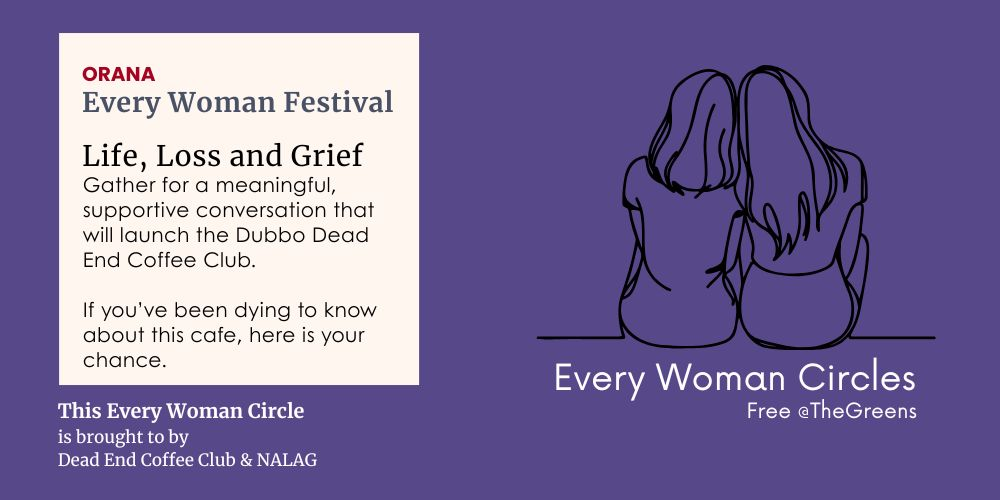
As a community participant, she joined Kaz for the Life, Loss & Grief Every Woman Circle, which formally welcomed the Dead End Coffee Club into Dubbo.
That overlap is normal in regional life.
The journalist is also the volunteer. The writer is also the CWA secretary. The person reporting on the community is also part of the community. The woman helping make a newspaper is also helping create a space where people can talk about grief.
The interesting regional stories often begin where the job description stops.
WHY LOCAL MEDIA MATTERS
A community can be full of good things and still feel as though nothing is happening.
That happens when the stories are scattered.
One organisation has an event. An artist has an exhibition. A volunteer group has been doing extraordinary work for twenty years. Somebody starts a support group. A young person makes something brilliant. A town has a person everybody knows but nobody has ever properly written about.
If nobody joins those dots, the region becomes less visible even to itself.
That is why Sharon keeps appearing in my thinking about regional media.
She understands the weekly practical work of publishing. She understands editing and deadlines. She understands the difference between a good story and an advertisement pretending to be one. And she understands that trust is built by repeatedly turning up and getting people’s stories right.
CREATIVITY, LOCAL MEDIA AND COMMUNITY
These are not three separate subjects in Sharon’s life.
The creativity makes the writing better.
The journalism gives the creativity rigour.
The community gives both of them a reason to exist.
And perhaps most importantly, Sharon still seems to genuinely like other people’s stories.
A good local story says: this happened here, these people matter, and this place is worth paying attention to.
— Sharon