WHERE IT BEGAN FOR US
Taco’Bout: Death and how to live with it.
One hour. A taco. A margarita. And a subject Western culture is very good at avoiding.
WHAT KEPT GOING
Dead End Coffee Club.
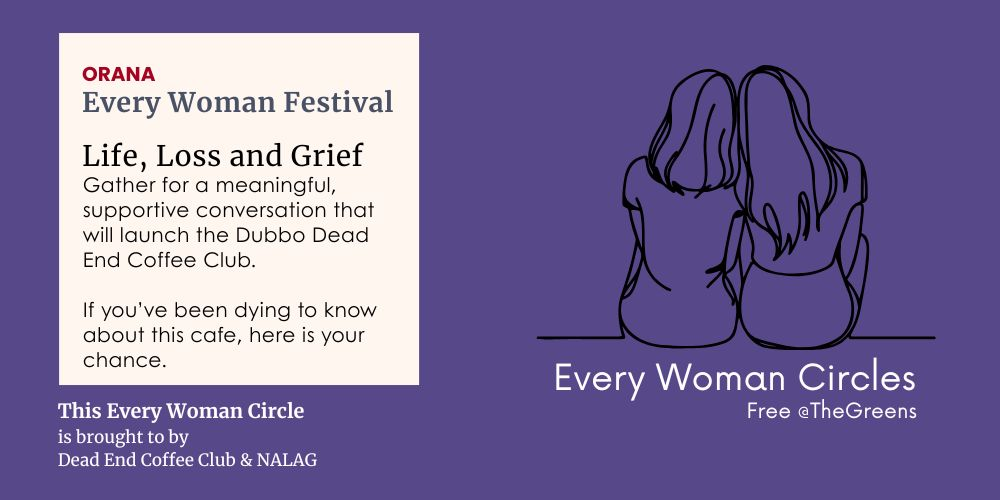
The club began in Narromine. The 2026 Festival’s Life, Loss & Grief Circle helped launch its Dubbo chapter.
THE HARD CONVERSATION
Death is one of the few things every one of us will meet, and most of us would still rather not talk about it.
My first proper Social Gain conversation with Kaz Hamilton happened before a Taco’Bout about death.
I went to see her at Harmonious Heart in Narromine because I wanted to work out how on earth you invite ordinary people to spend an hour talking about dying without making the whole thing feel unbearable.
Kaz knew immediately that the point was not to make death cheerful. It was to make it speakable.
As an end-of-life doula, she works in the territory most of us enter with no practice at all: diagnosis, dying, grief, practical decisions, fear, family, unfinished conversations and the strange ordinary details that continue while something enormous is happening.
You cannot make death less true. You can make it less lonely to talk about.
HOLDING SPACE
Kaz is very clear about what her role is, and what it is not.
She is not trying to replace a nurse, psychologist or counsellor.
The phrase she comes back to is holding space.
Sometimes somebody needs the person who is not carrying exactly the same grief. Someone who can sit beside the practical and emotional mess without needing the person who is dying, caring or grieving to look after them as well.
That might mean talking about what happens next. It might mean helping somebody work out what they want. It might mean making room for fear, anger, relief, sadness or the fact that none of those feelings arrive in a tidy order.
“Possibly the most important part of my role as an end-of-life doula is holding space.”
— Kaz Hamilton
WHY THIS WORK
For Kaz, the work is not theoretical.
Kaz has spoken openly about her own breast cancer diagnosis in 2015 and the role mindfulness, meditation, Reiki and sound practice played in the way she moved through that period.
She has also spoken about the death of her mother-in-law and seeing how healing work could bring greater peace near the end of life.
By the time we first sat down together, Kaz was a registered mindfulness and meditation teacher as well as a Reiki and sound-bath practitioner. At that point, her work included Harmonious Heart and the Western Cancer Centre in Dubbo.
Different practices, but the same basic question kept returning: what helps a human being feel less alone inside something difficult?
THE DEAD END COFFEE CLUB
Then she and Sharon Bonthuys gave the conversation somewhere regular to go.
Kaz and her friend Sharon Bonthuys created the Dead End Coffee Club in Narromine as a place where people could talk about death, dying, grief, diagnosis, caring and mortality over a cup of coffee.
The name is funny enough to take some of the stiffness out of the subject. The purpose underneath it is serious.
It is not only for somebody who has recently lost a person. A diagnosis can make mortality suddenly loud. Caring for somebody can do the same. So can ageing, anticipatory grief or simply realising there are conversations your family has been avoiding for years.
The club creates permission to start before a crisis decides the timing for you.
Sometimes the useful thing is not an answer. It is somewhere the question is allowed.
FROM NARROMINE TO DUBBO
The Festival did not invent the work. It gave an existing idea another room.
That distinction matters to me.
By the 2026 Orana Every Woman Festival, the Dead End Coffee Club already existed in Narromine. During Free @ The Greens, the Life, Loss & Grief Every Woman Circle created a supportive space for that conversation in Dubbo and helped launch the Dubbo Dead End Coffee Club.
Kaz and Sharon Bonthuys were part of that thread.
It is one of my favourite examples of what I mean by Better Together because there was no need to invent a shiny Festival program about grief. Good work already existed. The useful thing was to amplify it, connect it and give more people a way to find it.
The Circle itself was small.
Its consequence was not.
Attendance tells you how many people were in a room. It does not tell you what kept going after they left it.
A DIFFERENT KIND OF ROOM
A few nights later, Kaz was doing something that looked completely different.
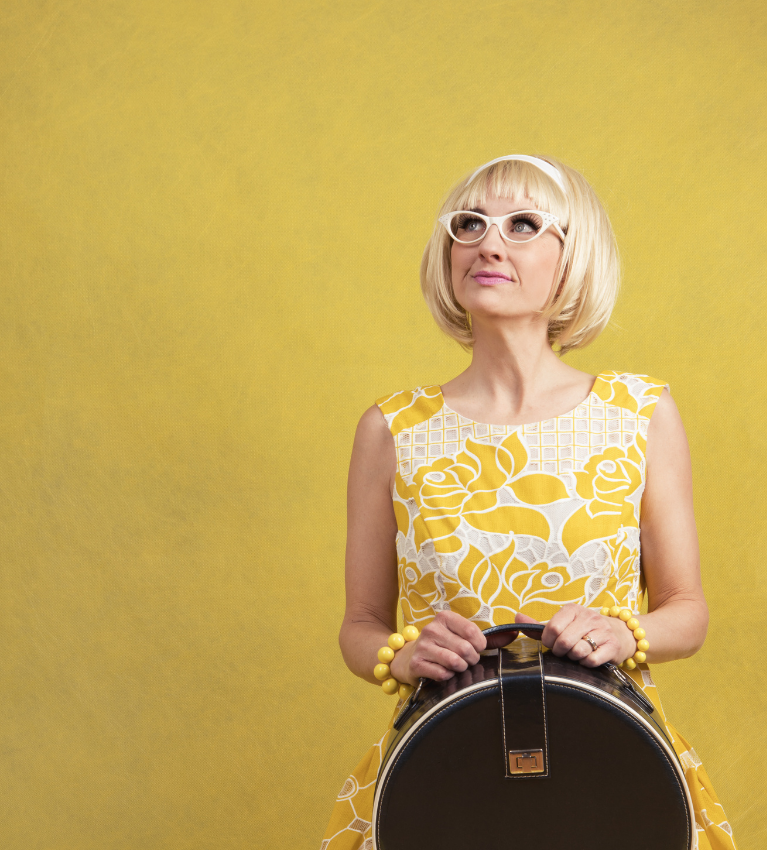
For Full Moon & The Divine Feminine, Yasmin Boland appeared live from London while Kaz held the physical room in Dubbo.
Kaz welcomed and grounded the group and closed the evening with a sound bath.
On paper, a full-moon event and a conversation about dying might look like two unrelated jobs.
With Kaz, they make more sense beside one another.
Both ask people to stop rushing for a moment. Both make room for reflection. Both recognise that bodies, feelings, fear, ritual and connection are part of being human whether or not our ordinary working lives leave much room for them.
CONVERSATIONS ABOUT DEATH, GRIEF AND CONNECTION
The thread is not really death.
It is connection when life gets difficult.
A Taco’Bout gave us one hour to say the uncomfortable words out loud.
The Dead End Coffee Club gave the conversation somewhere to continue.
The Festival helped the existing idea travel from Narromine into another Dubbo community space.
The Full Moon evening showed another side of the same woman: creating calm, reflection and connection without needing everybody to explain themselves first.
Kaz keeps working around the places where people can feel most alone.
And she keeps making those places a little easier to enter together.
A good conversation does not fix death. It makes it less lonely to be human beside it.
— Sharon