ONE CREATIVE LIFE, MANY THREADS
Studio 138. The Moment Lounge. Belonging. Inspired by Her. Tin Town Tess.
The projects do not sit neatly apart. One relationship keeps opening into another, and one story keeps finding another form.
“One that honoured the experience of womanhood in all its forms.”
Erifili, reflecting on what she wanted the inaugural Inspired by Her exhibition to add to the Festival.
THE INTERESTING PART
The job title keeps changing. The instinct does not.
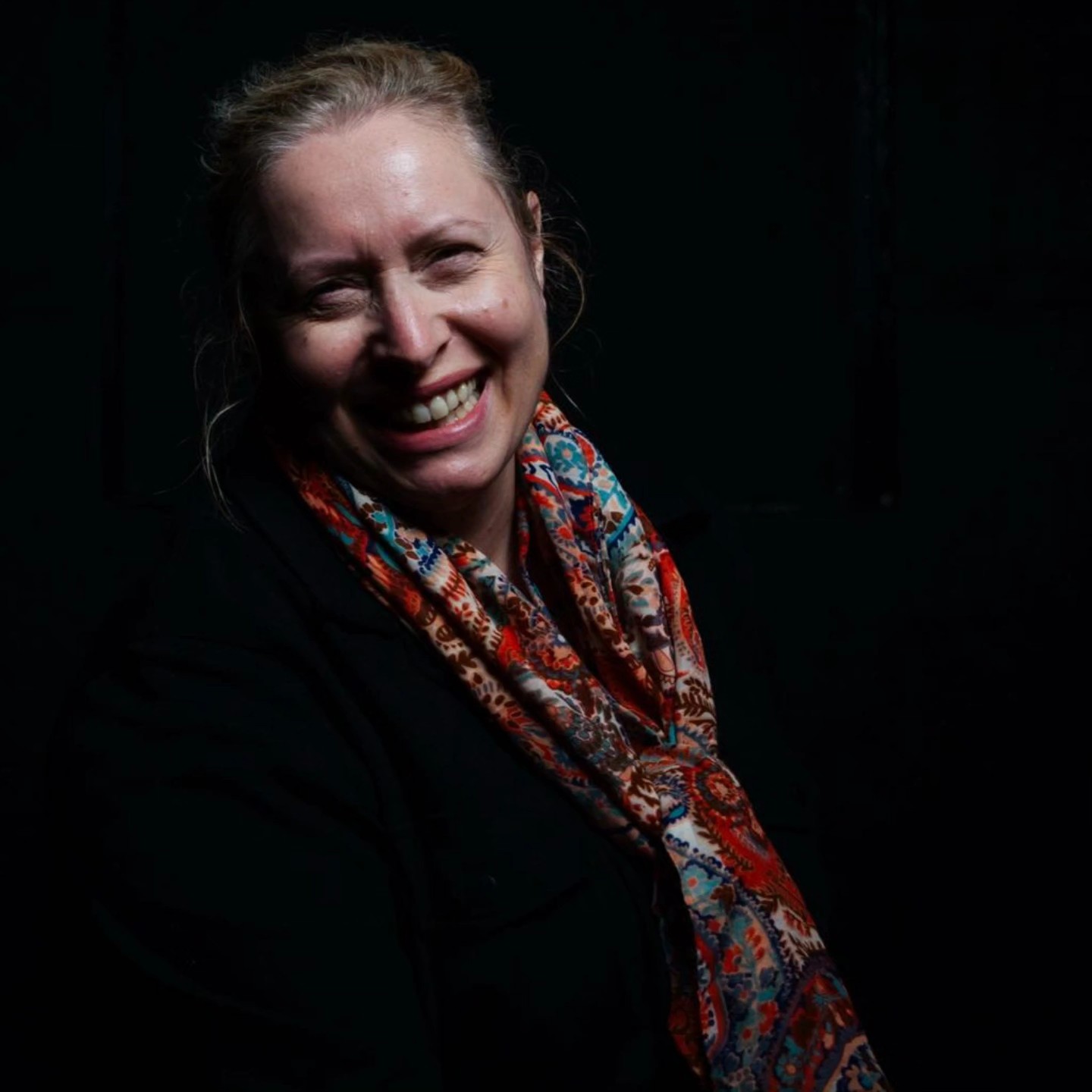
In the archive around Erifili, she appears as a writer, filmmaker, theatre-maker, curator, educator and creative practitioner.
All of those descriptions are true, and none of them is quite enough.
The thing that interests me is the movement between them.
A story might begin as a conversation and become a film. A piece of history might become a monologue. A Festival idea might become an exhibition. Someone else’s writing might need a reader, a recording, an edit, a room or a way to meet an audience.
Erifili is comfortable moving between those jobs.
She does not only tell stories. Very often, she helps stories become tellable.
THE MOMENT LOUNGE
One quiet room was an early clue.
One of our earliest Festival collaborations was the Moment Lounge at the first Dubbo Women’s Festival.
The Lounge grew through Rose Prout and Charnie Tuckey, the first two businesswomen to back the Festival financially. They helped shape a quiet upstairs space where women could step away from the noise, sit, breathe, stretch or simply stop for a minute.
Erifili and Studio 138 brought the film layer.
Guided breath, meditation and gentle movement could be experienced through locally made media, with local women part of the filmed content.
Rose and Charnie were central to shaping and backing the Lounge. Erifili brought another language into the room.
Film allowed wellbeing content to feel local, visual and human rather than clinical. A temporary room inside an event became its own little creative experience.
That is something I have seen Erifili do repeatedly: take an idea and find the form that lets people enter it.
WHAT IT TAKES TO BELONG
Then the subject became belonging itself.
Another thread opened through a Taco’Bout conversation with researcher Sophia Johnson about the difference between fitting in and belonging.
Erifili brought film into that conversation too.
The point was not to decorate a research conversation with something creative. The film gave the idea another way to land.
Belonging is difficult to explain only as a concept because most of us know it through moments: the place where we stopped feeling watched, the room where somebody knew our name, the community we entered slowly, or the home that became ours in ways we did not expect.
The creative work and Sophia’s research sat beside one another.
Later, Sophia’s own creative work would become part of Inspired by Her through Wambuul: Echoes of the Turning Tide, opening another line through Pearl Gibbs, Aunty Di, Country, history and living memory.
This is how the web keeps growing.
INSPIRED BY HER
By 2026, Erifili was helping build an entire creative conversation.
Inspired by Her grew from a wish to put a genuinely creative strand at the centre of the Orana Every Woman Festival.
In Erifili’s own reflection afterwards, she described wanting something that honoured “the experience of womanhood in all its forms”.
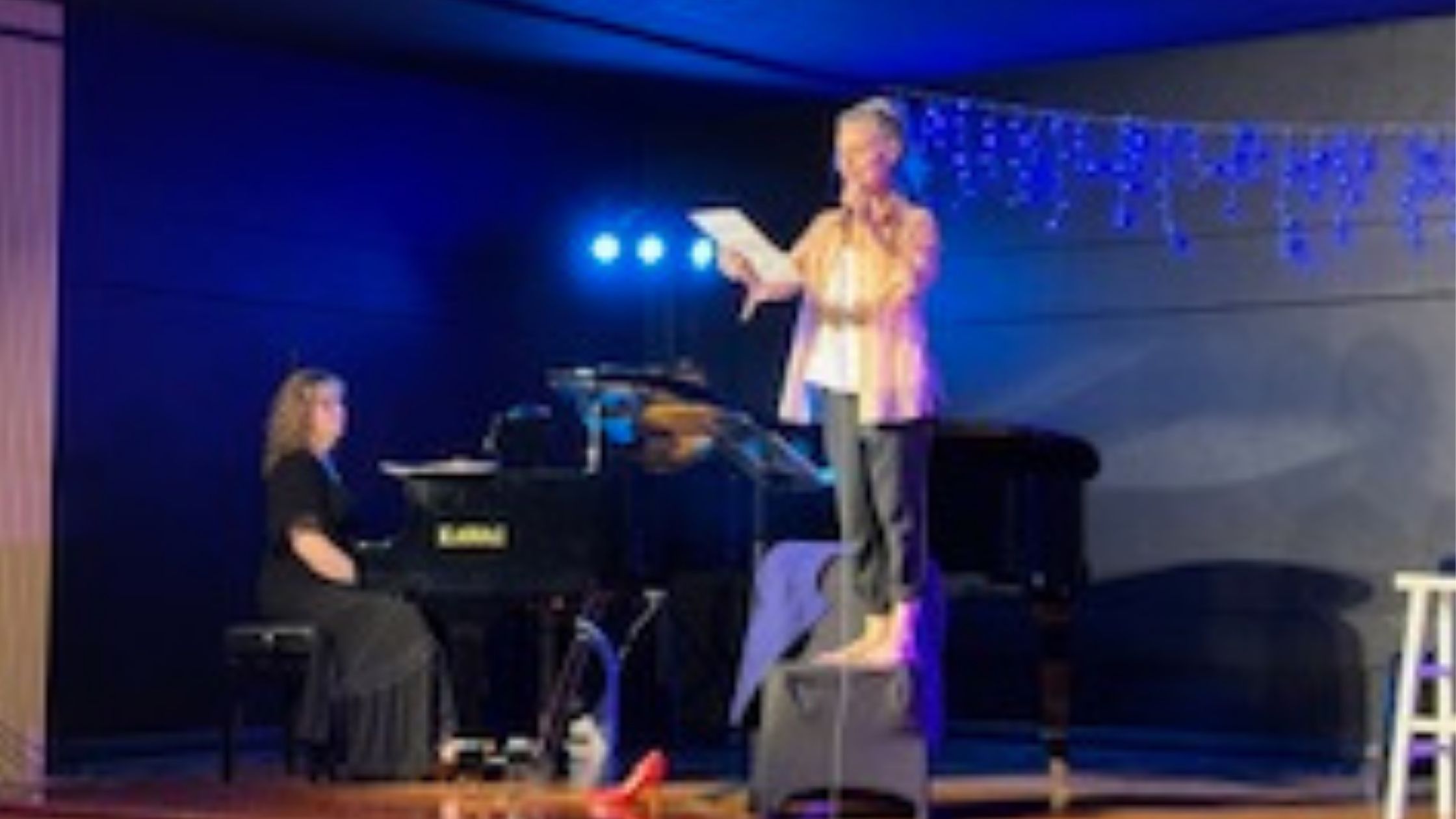
The exhibition and accompanying live performance brought together eight local women creative practitioners working across visual and written forms.
Some works spoke directly to history. Others explored identity, resilience, expectation, family, displacement and belonging. What joined them was place.
Erifili curated and coordinated the collection, but she was not standing outside it.
She also wrote. She read. She helped other women’s work reach the room.
Opening Night widened the frame again, bringing novelist Eleanor Limprecht, performer Rachael Beck, Erifili and local women into one live mix of literature, music, projection, artwork and conversation.
The point was never eight women making eight separate things. It was what happened when the works could speak beside one another.
TIN TOWN TESS
The curator became the writer.
Erifili’s own contribution was Tin Town Tess, a historical-fiction monologue set against life in Dubbo’s Tin Town in the 1930s.
She wrote the work. Kalina Davis performed it. Studio 138 recorded and edited it.
There it is again: one story moving through several people and several forms before it reaches an audience.
A writer imagines the voice. A performer gives it breath and body. A recording preserves it. An exhibition gives it context. The Orana Woman now gives it a permanent editorial home after the physical event is gone.
Regional creative work can disappear very quickly. A performance happens once. An exhibition comes down. A reading is heard by the people who happened to be in the room.
Erifili herself has spoken about space and resources remaining a challenge for regional artists, and about how even small opportunities can make a meaningful difference.
The archive is part of the answer.
INSIDE OTHER PEOPLE’S STORIES
Sometimes the creative act is helping somebody else’s work travel.
That is another reason I wanted Erifili in this first edition.
Her name turns up inside other women’s stories as often as it turns up at the top of her own.
With writer Nisaba Merrieweather’s COVID Lockdown and Homecoming, Erifili became the reader while Studio 138 handled recording and editing.
With Sophia, she brought film into a conversation about belonging.
With Inspired by Her, she helped a group of local women place their work in relationship to one another.
With Tin Town Tess, she wrote and someone else performed.
There is generosity in that kind of creative life. Not because the artist disappears. Erifili does not. But because authorship is not the only interesting role available.
Sometimes you write the story. Sometimes you hold the camera. Sometimes you curate the room. Sometimes you lend your voice so somebody else’s words can be heard.
MAKING STORIES BELONG
A story needs more than telling.
It needs somewhere to land.
That might be a theatre. A screen. A temporary upstairs lounge. A Taco’Bout conversation. An exhibition wall. A performer’s voice. A website page that means the thing can still be found later.
When I look across Erifili’s relationship with Social Gain and the Festival, that is the thread I see.
She keeps helping stories belong somewhere.
And once a story belongs somewhere, somebody else can find it.
That is when it starts travelling again.
Make the work. Make the room. Keep the story where people can find it.
— Sharon