ONE STORY, MANY THREADS
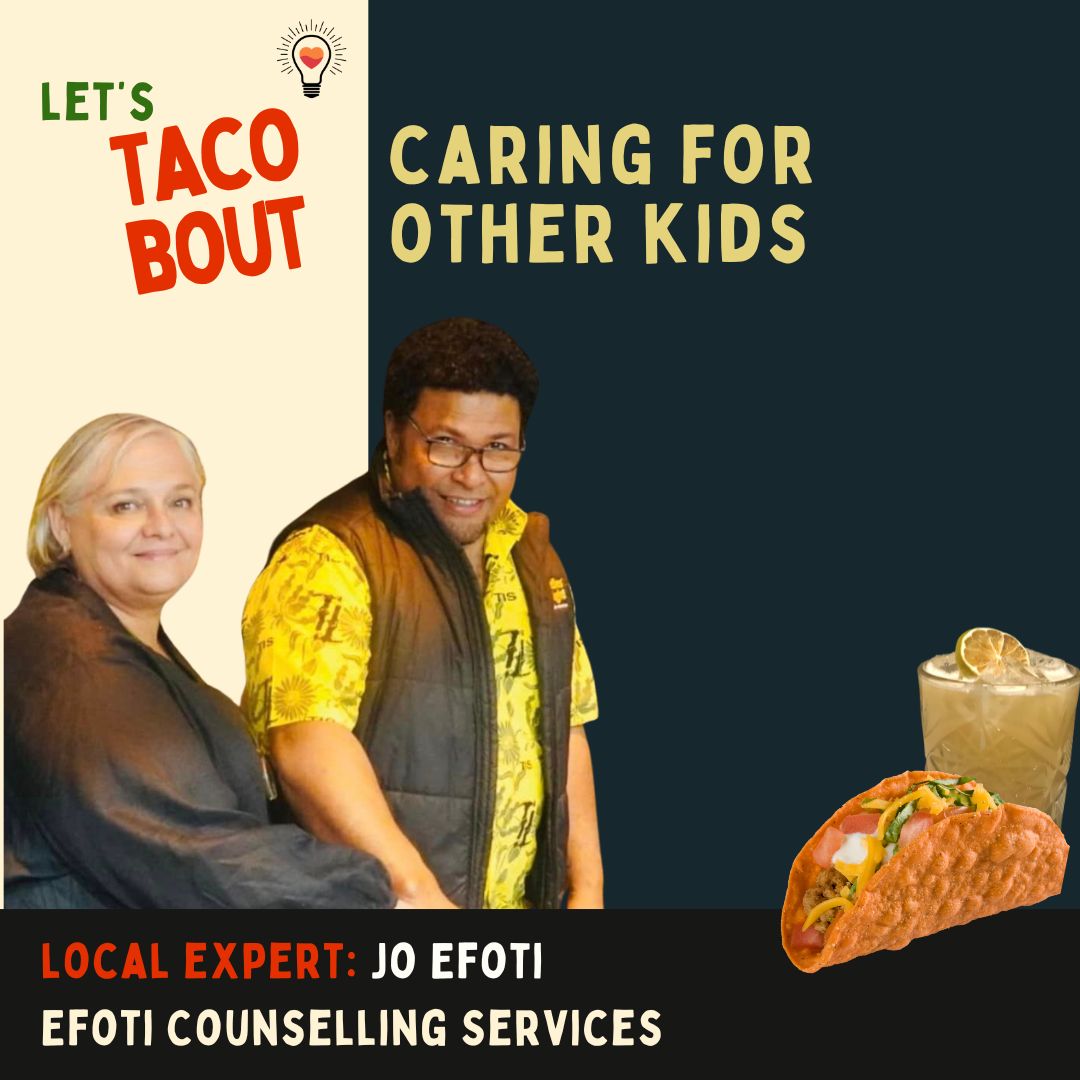
Jo first entered this story through a Taco’Bout conversation about foster care and the adults who shape young lives.
By 2026 she was also part of the Orana Every Woman Festival — contributing to an Every Woman Circle and joining the Women Who Hustle Markets.
That continuity is part of The Orana Woman story: people do not appear once. Their work, relationships and community contribution keep connecting.
I left home when I was fourteen. Up to that point I lived in the worst house on one of the worst streets in an equally charming suburb of Logan, Brisbane. I have a younger brother, eight years my junior — I couldn’t take him with me.
Our lives are vastly different today, and nothing has taught me more profoundly that to succeed in life — whatever success looks like — you need a sense of self-worth. Even a tiny amount.
Two people decided to step up for me at fourteen. They didn’t have to, but they did.
It started with letting me rent their granny flat for next to nothing, then sending me back to school. They’d behave like parents if I behaved like their child. Officially they’re not my foster parents, but that’s the explanation we’ve stuck with. They are still family today.
And the other kid they raised? He was in the room that night. Hi, Mick.
THEN THERE’S JO
Then we heard from Jo Efoti — who with her husband Bruno fostered 27 children while raising their own.
The room went very quiet. And stayed there.
Because 27 is one of those numbers you can read quickly without really taking it in. Twenty-seven children who, at some point in their lives, needed somewhere else to be. Different children. Different histories. Different needs. Arrivals and departures. A family opening its door again and again.
But Jo’s story does not sit neatly inside one old conversation about fostering. She keeps appearing in the wider community story: through Tradies In Sight and Dubbo Cares Day; through conversations about connection and belonging; and through the Orana Every Woman Festival.
At the 2026 Festival, Jo was part of an Every Woman Circle — one of the small, facilitated conversations designed to make room for women to talk, listen and connect. And the photograph on this page is Jo at the Orana Every Woman Markets.
I love that, because this isn’t really a story about someone who did one extraordinary thing. It is about a person who keeps participating in her community.
WHAT DOES SHOWING UP LOOK LIKE?
Not everyone can foster 27 children. Most of us won’t. But that was never really the question.
What is one thing every person can do for a young person?
When you walk past a young person in the street, do you acknowledge them? Do the kids in our community feel like this is their place too — or do they feel like they are in the way? What happens to the kid who is always labelled difficult?
Caring does not mean abandoning boundaries, ignoring safety or pretending that love alone can repair trauma. Foster care exists because some children cannot safely remain at home. But there is a wide stretch of human territory between becoming a foster carer and doing nothing.
It can be knowing the names of the kids in your street. Being the adult at sport who notices. Making room for the child who does not arrive with the same confidence, clothes, lunch, family structure or social skills as everyone else. Supporting the carers doing the heavy lifting. Refusing to reduce a young person to the worst thing they have done.
THE VILLAGE
We talk a lot about “the village”, usually as though it is something that either exists or doesn’t.
But perhaps the village isn’t a place at all. Perhaps it is a collection of tiny decisions: to notice; to ask; to make room; to feed someone; to drive them somewhere; to introduce them to somebody; to give them another chance; to open the granny flat; to send them back to school.
Sometimes, to open your home.
And sometimes simply to behave, for a moment, as though a young person’s presence in the world matters.
Not everyone can foster. Not everyone should. But all of us can show up.
And sometimes that can change the entire course of a life.