There’s often a moment before anything changes.
Not when the numbers shift, or the situation improves, but earlier than that. When something is finally spoken out loud.
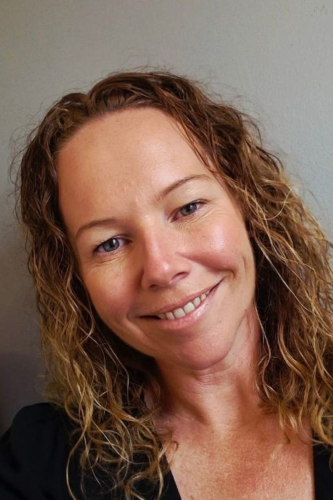
This is where Phoebe Maroulis works.
At the Orana Every Woman Festival, Phoebe joined Kelly Salisbury for The Money Story, a conversation that gently shifted the way financial wellbeing is understood. Together, they created a space that moved away from quick fixes and toward something more honest. Because what becomes clear, very quickly, is that money is rarely just about money.
It’s about what people are carrying. The pressure to manage rising costs, the impact of unexpected events, the strain that builds quietly over time, and the feeling of trying to hold everything together without always having the support to do so.
Phoebe’s work often sits in that space, where financial stress is only one part of a much bigger picture. Where conversations about money are also conversations about stability, safety, family, confidence, and the ability to make decisions without fear.
What she brings is not just knowledge of services or systems, but presence. The ability to meet someone where they are, without judgement, and help them begin to see what might be possible next. Because for many people, the hardest part is not solving the problem, it’s saying it out loud.
And in that moment, something shifts. Not everything at once, and not in a dramatic way, but enough. Enough to take a breath, enough to feel supported, enough to take the next step.
Phoebe’s work reflects something essential about community in regional Australia. Support doesn’t sit in one place. It’s built across people, services, and relationships — often quietly, often behind the scenes — but always with the same intention: to help people move forward.
Through The Money Story, Phoebe contributed to creating a space where women could speak openly about money, often for the first time, and begin to understand the broader story around it. Not as something to be fixed immediately, but as something to be understood.
Because when we understand the story, we can begin to change what happens next.